the sweet spot blog.
social media . marketing . unsolicited opinions.
the latest in sweet reads
Stop That Scroll.
The psychology of attention, the art of a good hook, and why getting someone to stop scrolling might just be the most important thing your brand does.
I have a question. When was the last time you actually stopped scrolling?
Not because your phone died or you remembered you had something vaguely important to do. I mean properly stopped. Mid-scroll, thumb suspended, suddenly invested in something you had absolutely no intention of watching.
Maybe it was a particularly good outfit. A controversial opinion. Someone's incredibly niche morning routine. Or a stranger telling a story that, for reasons you still can't explain, you simply had to hear the end of.
Whatever it was, something caught you.
And somewhere, a marketer was probably having a very good day.
Because in a world where we're consuming content almost constantly, getting someone to stop has become something of an art form.
And for brands, I'd argue it's one of the most important skills to master.
The attention economy has entered the chat.
There's a rather inconvenient truth about social media marketing that I think we need to discuss.
Nobody opens Instagram hoping to see your brand's latest post.
Sorry. I know.
They're there to catch up with friends, stalk an ex, look at holiday destinations they can't afford, or enjoy a little mindless scrolling before bed. Your beautifully curated campaign, which took three meetings, a content shoot and an unreasonable number of Canva revisions, is competing with all of that.
And the competition is rather good.
This is the attention economy. A world where brands aren't simply competing with other businesses in their category. They're competing with absolutely everything someone could be looking at instead.
Which makes attention an incredibly valuable currency.
You can have the most beautiful branding, an exceptional product and a social strategy that looks fabulous in a presentation. But if nobody stops long enough to notice any of it, what's the point?
A rather expensive exercise in posting for the sake of posting, if you ask me.
So, what actually makes us stop?
Here's where things get interesting. And a little scientific.
Our brains are constantly deciding what deserves our attention. They have to. We're surrounded by far more information than we could possibly process, so our visual systems prioritise certain things while filtering out others.
Researchers call this selective attention.
Some things catch our eye because they're visually distinctive. Others because they're personally relevant, unexpected or connected to something we're already interested in.
Think about walking into a crowded room and immediately noticing someone wearing an incredible red coat. Or hearing your name mentioned in a conversation you weren't even listening to.
Your brain has decided that particular information is worth paying attention to.
Social media works on a similar principle, albeit at a rather more ridiculous pace.
An unexpected opening shot, a familiar problem articulated perfectly, an interesting face, a bold statement or a question that sparks curiosity can all interrupt the rhythm of scrolling.
It's not necessarily the loudest content that wins, either.
Sometimes the most effective thing you can do is create a moment that feels different from everything surrounding it.
A beautifully composed still image in a feed full of frantic video edits. A quiet opening when everyone else is shouting. A sentence that makes someone think, hang on, that's exactly how I feel.
That's the sweet spot.
The moment your content stops feeling like something being shown to someone and starts feeling like something meant for them.
The hook is having a moment. But let's not confuse attention with interest.
If you've spent any time in marketing circles recently, you'll have heard an awful lot about hooks.
Hook this. Hook that. Hook them in the first three seconds.
And yes, the opening matters enormously.
But somewhere along the way, I think we've started confusing grabbing attention with earning it.
We've all seen those videos.
The dramatic opening. The unnecessarily alarming headline. The promise of a life-changing secret that turns out to be something along the lines of drinking water and getting eight hours of sleep.
Groundbreaking stuff.
It might get someone to stop. It might even get them to watch.
But does it make them trust you? Remember you? Want to hear from you again?
Not necessarily.
For me, a good hook isn't about tricking someone into watching something they otherwise wouldn't. It's about giving them a compelling reason to care about what comes next.
And importantly, delivering on that reason.
Because there's a rather big difference between attention that lasts three seconds and attention that builds a relationship.
The algorithm is paying attention to attention.
Now, I'd be doing my job rather poorly if we didn't discuss the algorithm.
While the exact mechanics vary between platforms, the principle is fairly straightforward: social platforms use signals from how people interact with content to help decide what to show them next.
Instagram, for example, has identified watch time, likes and sends as particularly important ranking signals.
Which makes sense when you think about it.
If someone watches your Reel, sticks around until the end or sends it to their group chat with a rather enthusiastic "THIS", they're giving the platform information about what they find interesting.
And that can influence how widely content is distributed.
This is why I find it so interesting when businesses become fixated on how many times they've posted rather than what people are actually doing with those posts.
Posting five times a week means very little if your audience isn't interested in any of it.
A Reel that gets fewer views but sparks genuine conversations, profile visits and enquiries might be doing considerably more for your business than one that reaches thousands of people who forget about you immediately.
Reach is lovely. Relevance is where things get interesting.
And while there's absolutely a place for chasing reach, particularly when you're trying to grow an audience, I think we need to be a little more thoughtful about what happens after someone notices us.
Being memorable is much more interesting than being viral.
I've always found the obsession with going viral a little fascinating.
Of course, we all love a big number. Watching a post take off is exciting, and I'm certainly not going to pretend otherwise.
But virality isn't a business strategy.
You could have a million people watch a video tomorrow. Fantastic. But if none of them remember who made it, understand what you offer or have any reason to come back, what have you really gained?
I'd much rather create content that makes the right thousand people genuinely interested than the wrong million vaguely entertained.
Because the brands that stay with us tend to have something beyond a good hook.
A recognisable personality. A point of view. A visual identity. A particular way of speaking that makes you know it's them before you've even seen the username.
They make you feel something.
And perhaps that's the part we don't discuss enough.
Attention might be what gets someone through the door, but personality is what makes them want to stay.
So, how do we actually create stop-scrolling content?
I wish I could tell you there's a magic formula. A particular font, a trending audio or a perfectly timed transition that guarantees your next post will take off.
Unfortunately, the internet would be a much easier place to work if that were the case.
What I can tell you is that the strongest content usually starts with a little more thought than what should we post today?
It starts with understanding who you're speaking to.
What do they care about? What are they curious about? What makes them laugh? What frustrates them? What do they wish someone would finally say out loud?
Then comes the creative part.
Maybe it's an opening line that challenges something they've always believed. Maybe it's a beautifully shot product detail that makes them look twice. Maybe it's a behind-the-scenes moment that feels wonderfully human.
And sometimes it's simply telling a really good story.
Personally, I think brands underestimate storytelling. We get so caught up in showcasing the product, explaining the service and making sure every key message has been squeezed into a 15-second Reel that we forget people actually enjoy being entertained.
They enjoy learning something. Feeling understood. Being let in on something.
You don't always need to sell the product to make someone interested in buying it.
In fact, sometimes the less something feels like an advertisement, the more persuasive it becomes.
Funny how that works.
A little less content. A little more intention.
One thing I've become increasingly convinced of through running Brand Sugar is that great social media marketing requires just as much restraint as creativity.
Not every idea needs to become a post. Not every trend needs your brand's interpretation. And not every piece of content needs to be shouting about your latest offering.
Sometimes the smartest decision is to ask whether what you're creating is actually worth someone's attention.
Would you stop for it?
Would you send it to a friend?
Would you remember it tomorrow?
And perhaps most importantly, would it make you feel any differently about the brand behind it?
If the answer is no, there's probably a little more work to be done.
That doesn't mean every post needs to be revolutionary. Far from it. Some of the best-performing content is wonderfully simple.
It just needs a reason to exist beyond filling a gap in the content calendar.
And that's the whole point, right?
We've built an entire industry around being seen.
More reach. More impressions. More views. More followers.
But I think the real opportunity lies in being noticed.
Properly noticed.
The kind of attention that turns a casual viewer into a follower, a follower into a customer and, if you've done your job particularly well, a customer into someone who tells their friends about you.
Because social media isn't really about how much content we can put in front of people.
It's about what we can make people care about.
And in a world where everyone is scrolling, maybe the most powerful thing a brand can do is give someone a reason not to.
Now, if you'll excuse me, I have some scrolling to do.
With a little sugar,
Court x
Founder, Brand Sugar Creative

editors notes
Welcome to our little corner of Brand Sugar.
A place for fresh perspectives, creative thinking and the occasional hot take on all things social media, marketing and branding.
Consider this your inside scoop on what’s working, what’s changing and what’s worth your attention.
A little sweet, a little opinionated. Always with purpose.
Love, Court x
the sweet spot blog.
stalk our socials
Brand Sugar Instagram

(our work in action (keeping it professional)

Brand Sugar TikTok
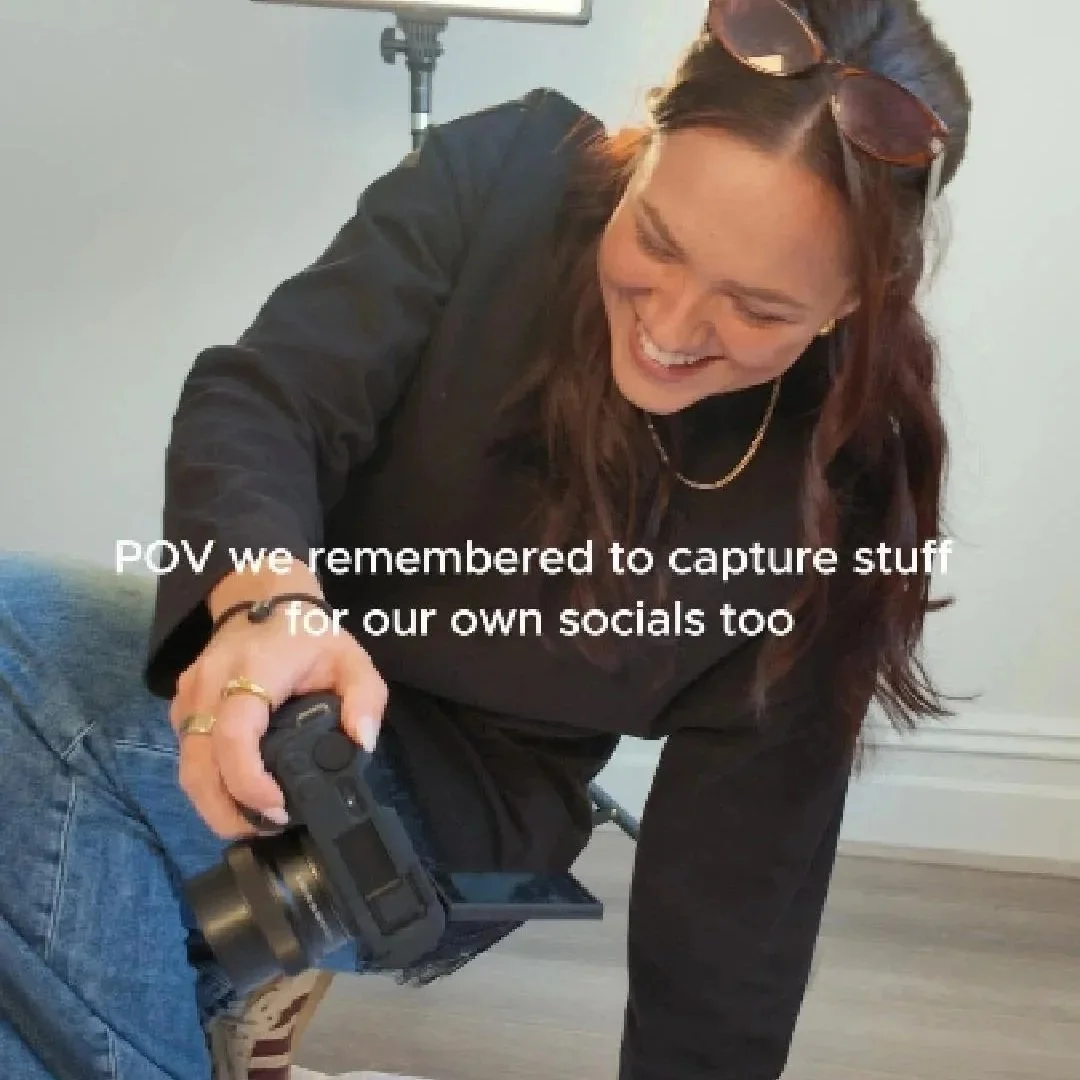
life at sugar HQ (behind the scenes)
Court with Sugar Instagram
hang out with our founder (marketing and fashion)